

May in India is a month of extremes.
In Delhi, the temperature is touching 44 degrees and the air carries a dry, white heat that makes every outdoor activity feel like a mild punishment. In Patna and Lucknow and Bhopal, it is the same. The plains of North India in May are not unkind exactly — they are simply serious about summer in a way that leaves no room for negotiation.
And yet — two hours from Delhi by flight, or six hours by road — there are places where May is genuinely one of the finest months of the year. Where the temperature is 15 degrees, not 44. Where the mornings are cool enough for a light jacket. Where the pine forests smell of rain that has not arrived yet but is coming, and the mountain light has the particular quality of late spring that photographers spend entire careers trying to capture.
India is extraordinary in this way. It is large enough and topographically varied enough that while one part of it is in the furnace, another part is in a different season entirely.
This guide covers the 10 best places to visit in India in May 2026 — the destinations that are at their most beautiful or most accessible in May, the hidden gems that most people overlook, and the honest practical information that helps you plan a trip worth taking.
Why May Is Actually a Great Month to Travel in India
May has an undeserved reputation as a bad travel month. The heat in the plains is real — but it drives most tourists away from certain destinations, which means those destinations are significantly less crowded and often significantly cheaper than they are in October or December.
And for hill stations, coastal destinations in the south, and certain northeastern states, May is genuinely one of the finest months — the pre-monsoon warmth without the monsoon's disruption, the landscape at its greenest before the rain, the flowers at their peak.
The key is knowing where to go.
1. Shimla and Manali, Himachal Pradesh — The Classics at Their Best
Shimla (2,206 metres) and Manali (2,050 metres) are the most visited Himalayan hill stations in North India — and May is when they earn their reputations most fully.
In Shimla, May brings temperatures of 15–22°C in the day, cool evenings, and the rhododendron forests in their last flowering. The Mall Road, Christ Church, and the Viceregal Lodge are best explored in May — before the June-July summer crowds arrive from Delhi and Punjab — when the town retains the quiet, unhurried quality that makes it genuinely pleasant.
In Manali, May marks the start of the adventure season. The Solang Valley is transitioning from ski slopes to paragliding ground. The Beas River is running full with snowmelt — ideal for white-water rafting. The Rohtang Pass (3,978 metres) may still have snow in early May, accessible with a permit for the day trip that most Manali visitors consider essential.
Why May specifically: The summer school holidays (which begin in late May-early June) bring enormous crowds to both Shimla and Manali. Visiting in the first three weeks of May gives you all the beauty with significantly less competition for hotel rooms and restaurant tables.
Best for: Families, couples, first-time Himalayan visitors.
Temperature in May: 12–22°C (Shimla), 10–20°C (Manali)
Travel tip: Book accommodation at least 4–6 weeks in advance for May, as the pre-summer rush starts early.
2. Spiti Valley, Himachal Pradesh — The Road Just Opened
Spiti Valley — the high-altitude cold desert at 12,500 feet — becomes accessible in May as the passes begin to clear, and there is a brief, precious window (mid-May to early June) when the valley is open but not yet crowded.
The Manali-Spiti road via Rohtang Pass and the Kunzum La typically opens in late May, depending on snowfall. The Shimla-Spiti road via Kinnaur opens slightly earlier. Either route, arriving in Spiti in May means arriving when the valley's small Buddhist communities are emerging from their winter isolation, the monasteries are conducting their post-winter ceremonies, and the landscape has the particular stark beauty of a place that has just survived something difficult.
Key Monastery (Ki Gompa) on its rock pinnacle, Tabo Monastery with its 1,000-year-old murals, Chandratal Lake — all of these are at their most accessible and their least crowded in late May and early June.
Why May specifically: June-September brings the bulk of Spiti's tourists. Late May is genuinely uncrowded — you may have Key Monastery's courtyard entirely to yourself at sunrise.
Best for: Serious travellers, photographers, Buddhist heritage enthusiasts.
Temperature in May: 5–15°C (cold nights, comfortable days)
Travel tip: Check road opening updates from the Himachal Pradesh Road Transport Corporation before finalising dates.
3. Darjeeling and Sikkim — Tea, Mountains and the Most Beautiful Views in India
Darjeeling (2,042 metres) in West Bengal and Sikkim (various altitudes from 300 metres to over 5,000 metres) are at their finest in May — the pre-monsoon season when the air is clear, the Kanchenjunga range is fully visible on most mornings, and the tea estates are in their first flush harvest.
Darjeeling first flush tea — the spring harvest from late March through May, considered the finest and most prized Darjeeling tea of the year — is in full production in May. Visiting a working estate during first flush is one of the finest agri-tourism experiences in India: watching the pluckers move through the rows of tea bushes, visiting the factory where the leaves are processed within hours of picking, and drinking the fresh tea in the estate's tasting room.
The Toy Train (Darjeeling Himalayan Railway, UNESCO World Heritage) from New Jalpaiguri to Darjeeling is at its most atmospheric in May — the cloud-forest sections, the steep climbs, the small stations where vendors board selling chai.
In Sikkim, May is the rhododendron season in the middle and high altitudes — the forests of the Yumthang Valley (North Sikkim) are at their peak bloom, a riot of pink, red, white, and purple flowers against the snow peaks. The Guru Dongmar Lake (5,425 metres) is accessible in May (with Inner Line Permit).
Why May specifically: The monsoon arrives in Darjeeling and Sikkim in mid-June, bringing heavy rainfall and cloud cover that obscures the mountain views entirely for three months. May is the last clear month before the monsoon.
Best for: Nature lovers, tea enthusiasts, photographers, anyone who wants to see Kanchenjunga.
Temperature in May: 12–20°C (Darjeeling), varies by altitude in Sikkim
Travel tip: Get Sikkim's Inner Line Permit in Gangtok at the permit counter — straightforward, same-day processing for Indian citizens.
4. Kerala Backwaters — The South's Finest Before the Monsoon
Kerala — the southwestern coastal state, known for its backwaters, spice plantations, and the most sophisticated Ayurvedic tradition in India — has a different May logic from the Himalayan destinations.
The temperature in Kerala in May (28–35°C) is warm but coastal and humid rather than the dry furnace of the North Indian plains. And the backwaters of Alleppey (Alappuzha) — the network of canals, rivers, and lakes that weave through the coastal rice belt — are at their greenest and most beautiful in the weeks just before the monsoon arrives.
A houseboat stay on the Alleppey backwaters in May — overnight on a traditional kettuvallam (the wide-beamed rice boat converted into a comfortable floating guesthouse) — is one of India's finest slow-travel experiences: the water still, the rice fields brilliant green on both sides, the afternoon clouds building and not quite breaking, the food cooked fresh on the boat's kitchen and served on the deck.
Munnar (1,600 metres) — the hill station in Kerala's Idukki district, surrounded by tea estates — is significantly cooler (15–25°C) than the coast in May and one of the most beautiful hill station landscapes in South India. The tea estates, the Eravikulam National Park (home to the endangered Nilgiri tahr), and the misty mornings make Munnar an ideal May destination for those who want the beauty of the Himalayas without the travel distance.
Why May specifically: Kerala's monsoon arrives around June 1st — the earliest monsoon arrival of any Indian state. May is the last clear, dry month before the rain comes. And when the monsoon does arrive, Kerala celebrates it — the Kerala Piravi (arrival of the monsoon) is a cultural event. But for backwater houseboats and Munnar tea estate walks, May gives you the finest conditions.
Best for: Couples, families, food lovers, anyone wanting Ayurvedic treatment.
Temperature in May: 15–25°C (Munnar), 28–35°C (Alleppey coast)
5. Coorg (Kodagu), Karnataka — Coffee Estates and Misty Hills
Coorg — the coffee-growing district of Karnataka, at altitudes of 900–1,600 metres — is one of South India's most beautiful and most underrated hill destinations, and May is an excellent time to visit.
The coffee harvest in Coorg happens from November through January, but the estates are beautiful year-round — the coffee plants under their shade trees, the cardamom and pepper growing beneath them, the overall quality of the agricultural landscape that has been tended for over 200 years. In May, the estates are lush and green, the waterfalls (including the spectacular Abbey Falls and Irupu Falls) are running well from the pre-monsoon rains, and the Brahmagiri Wildlife Sanctuary offers excellent birdwatching.
Abbey Falls in May — before the monsoon's full fury swells the river to flood stage — is at a beautiful middle volume: impressive, accessible, and surrounded by the particular vibrating green of the pre-monsoon Coorg forest.
The Coorg people (Kodavas) maintain a distinct culture — their own language, their own traditional dress, and a martial tradition that produced a remarkable number of senior Indian military officers disproportionate to the community's size. The Kodava cultural calendar includes several unique festivals; visiting a Coorg homestay and eating authentic Kodava food (pandi curry — pork curry, koli curry — chicken curry, akki rotti — rice roti) is one of the finest food experiences in South India.
Why May specifically: June onwards brings heavy monsoon rain to Coorg. May offers the best of the pre-monsoon landscape — green, dramatic, and mostly clear.
Best for: Couples, food lovers, nature enthusiasts, coffee culture explorers.
Temperature in May: 18–28°C
6. Andaman and Nicobar Islands — The Best Beach Weather in India
Port Blair and the accessible islands of the Andaman archipelago — Havelock Island (Swaraj Dweep), Neil Island (Shaheed Dweep), and the extraordinary Radhanagar Beach — offer some of the finest beach conditions in India in May.
The Andaman Sea in May is warm (27–29°C water temperature), clear (visibility up to 15 metres for snorkelling and diving), and the weather is sunny with low humidity — the northeast monsoon is long gone and the southwest monsoon has not yet arrived. Radhanagar Beach on Havelock Island is consistently ranked among Asia's finest beaches, and in May it is at its most beautiful.
Scuba diving and snorkelling in the Andamans in May is among the finest in India — the coral reefs around North Bay, Elephant Beach, and the remote Barren Island (India's only active volcano, accessible by day trip from Havelock) are in excellent condition, the water warm and clear.
Why May specifically: The Andaman monsoon arrives in late May or early June, so the first three weeks of May offer the finest conditions of the year. After June, sea conditions deteriorate and many dive operators close.
Best for: Beach lovers, divers, snorkellers, honeymoon couples.
Temperature in May: 28–32°C, water 27–29°C
Travel tip: Book ferry tickets between Port Blair, Havelock, and Neil Island well in advance — the government ferry service is reliable but seats are limited and fill quickly in May.
7. Ooty and the Nilgiris, Tamil Nadu — The Queen of South Indian Hill Stations
Ooty (Udhagamandalam) — at 2,240 metres in the Nilgiri Hills of Tamil Nadu — is the finest hill station in South India and one of the most beautiful in May, when the surrounding hills are covered in flowering shrubs and the temperature is 15–25°C.
The Nilgiri Mountain Railway (UNESCO World Heritage Site) — the rack railway from Mettupalayam to Ooty, climbing 326 km through dense jungle and tea estate country — is one of the finest train journeys in South India. The May journey, with the pre-monsoon green of the Nilgiris on every side and occasional mist in the higher sections, is genuinely extraordinary.
Botanical Garden in Ooty, established in 1848 — one of the finest colonial-era botanical gardens in India — holds its Flower Show in May, which is one of the most attended horticultural events in South India, featuring thousands of plant varieties in elaborate displays.
Kodanad Elephant Sanctuary (40 km from Ooty), the Mudumalai Tiger Reserve (at the base of the Nilgiris), and the atmospheric Doddabetta Peak (2,637 metres, the highest point in the Nilgiris) are all accessible from an Ooty base.
Why May specifically: The Ooty Flower Show (held annually in May) is a major attraction. Outside the flower show period, May gives you the Nilgiris' finest pre-monsoon weather — clear, cool, green.
Best for: Families, nature lovers, anyone escaping the South Indian heat.
Temperature in May: 15–25°C
8. Meghalaya — The Wettest State at Its Most Dramatic Pre-Monsoon
Meghalaya — the small northeastern state whose name means abode of clouds — is best known for its extraordinary rainfall (Cherrapunji and Mawsynram are among the wettest places on Earth) and its living root bridges.
But May — just before the full monsoon arrives — is an extraordinary time to visit. The waterfalls, fed by early monsoon moisture and the accumulated catchment of the hills, are building in volume. The Nohkalikai Falls (340 metres — India's tallest plunge waterfall) in May is beginning its most dramatic phase, not yet at full monsoon volume but spectacular. The living root bridges of the East Khasi Hills — trained over decades by the Khasi people using the aerial roots of rubber fig trees — are lush and beautiful before the heaviest rains arrive.
Dawki — the river crossing to Bangladesh where the Umngot River runs with extraordinary clarity over a pale stone riverbed — is at its most transparent in the pre-monsoon season. The photographs of boats appearing to float in mid-air above the riverbed have made Dawki internationally famous; May is the finest time to see this phenomenon.
Cherrapunji (Sohra) — with its dramatic viewpoints over the Bangladesh plains far below, its limestone caves, and its waterfalls — is best visited in the first two weeks of May before the heaviest monsoon rains make outdoor exploration difficult.
Why May specifically: Meghalaya is genuinely unique in that even the early monsoon rain — arriving in May — enhances the experience rather than diminishing it. The clouds and mist that give the state its name are at their most atmospheric. But the first two weeks of May give you the beauty with less disruption.
Best for: Adventure travellers, photographers, nature enthusiasts, first-time Northeast visitors.
Temperature in May: 18–26°C
9. Leh-Ladakh — The High Desert Wakes Up
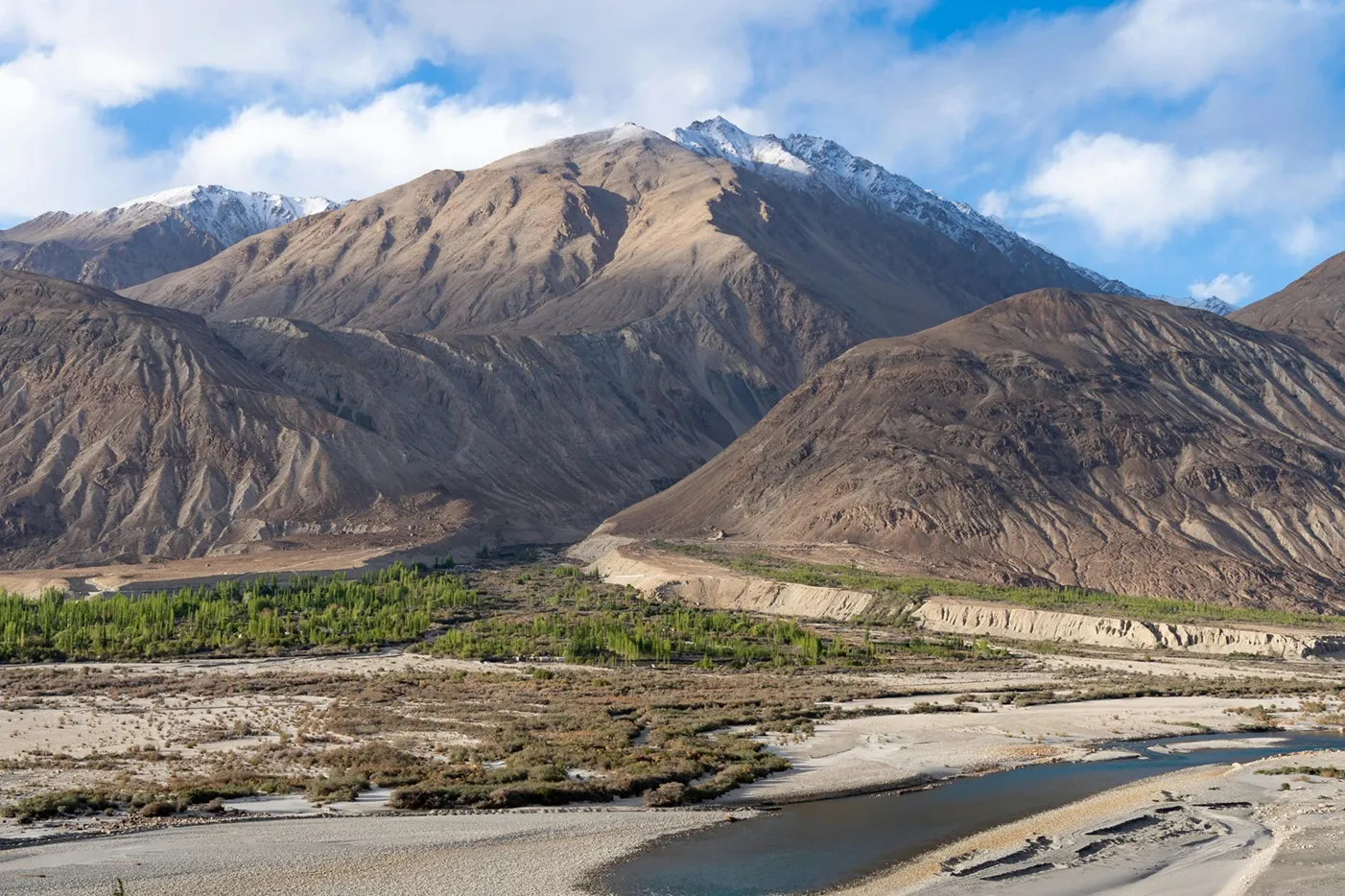
Leh (3,524 metres) and the Ladakh high-altitude desert become accessible in May as the Manali-Leh Highway and the Srinagar-Leh Highway open after winter closure.
The landscape of Ladakh in late May — the snow still on the high peaks, the rivers running high with snowmelt, the monasteries conducting their post-winter festivals, the apricot orchards in the villages blooming briefly before the short mountain summer fully arrives — is one of the most beautiful in India.
Key destinations: The Pangong Lake (4,350 metres), the Nubra Valley with its sand dunes and double-humped Bactrian camels, the Magnetic Hill, and the monasteries of Thiksey, Hemis, and Diskit are all accessible from a Leh base in May (conditions permitting — confirm road status before travelling).
Acclimatisation is essential: Arriving in Leh by air (from Delhi or Mumbai) drops you directly at 3,524 metres with no gradual altitude gain. Spend at least 2 full days in Leh town doing nothing strenuous before attempting any excursions. Altitude sickness is common among visitors who ignore this.
Why May specifically: By June, Ladakh fills with the summer tourist rush. Late May — particularly the last two weeks, when the highways have opened but the main season has not yet begun — is the finest window for Ladakh's landscapes without the crowds.
Best for: Photographers, adventure travellers, motorcycle tourers, Buddhist heritage enthusiasts.
Temperature in May: 5–20°C (significant daily variation — cold nights, warm days)
10. Goa — The Quiet Season Reveals a Different Side
Goa in May is entirely different from the December-January peak season version — and many experienced Goa visitors argue it is more interesting.
The beaches in May are warm, the sea is calm (the southwest monsoon has not yet arrived), and the prices are significantly lower than peak season. The tourist crowds are largely gone — the beach shacks are still open, the restaurants are still serving, but the overwhelming density of visitors that makes peak-season Goa occasionally exhausting has thinned to manageable levels.
More significantly, May in Goa is when the local cultural calendar becomes more visible. The Shigmo festival (if it falls late) and the pre-monsoon festivals of Goan Catholic villages are often in May. The Goa Cashew Festival — a celebration of the cashew harvest, with cashew feni being produced from the freshly pressed cashew apples — is a genuinely distinctive May event.
Old Goa's churches (UNESCO World Heritage), Panaji's Fontainhas quarter, and Divar Island are best experienced in May when the tourist overlay is thinner and the city's own life is more visible.
Why May specifically: Goa's monsoon arrives dramatically around June 10th — some of the most spectacular monsoon arrivals in India. May is the last clear, warm, calm-sea month. The last week of May specifically offers the finest combination of clear weather, low prices, and empty beaches.
Best for: Repeat Goa visitors, beach lovers, heritage seekers, those who want the "real Goa."
Temperature in May: 28–34°C (warm but coastal — manageable with sea breeze)
My Personal Top Pick for May — Darjeeling
If I could go anywhere in India in May, I would go to Darjeeling.
I made a May visit to Darjeeling three years ago — a solo trip, four days, no particular agenda beyond the tea estates and the mountain view. On the first morning I woke at 4:30 AM and walked to the Tiger Hill viewpoint for sunrise over Kanchenjunga.
The mountain appeared from the darkness slowly — first a suggestion of white above the cloud layer, then a definite shape, then the full mass of the third-highest mountain in the world turning from grey to pink to gold as the sun caught it from below the horizon. The five major peaks of the Kanchenjunga massif, spread across 25 kilometres of sky, lit up one by one.
There were perhaps 50 other people at the viewpoint. Nobody spoke. We just watched.
Later that morning I was at the Makaibari Tea Estate — the oldest in Darjeeling, established in 1859 — tasting the first flush tea that had been picked five days earlier. The estate manager walked me through the flavour notes: muscatel, floral, a slight astringency that fades into something almost honey-like. He poured three varieties side by side. I drank all of them slowly.
Between Kanchenjunga at sunrise and first flush tea at 9 AM, May in Darjeeling had already exceeded every reasonable expectation.
May is a better time to visit Darjeeling than October. I say this confidently and will not take it back.
Quick Reference — May 2026 Travel Summary
| Destination | May Temperature | Best For | Crowd Level |
|---|---|---|---|
| Shimla/Manali | 10–22°C | Families, couples | Low-medium |
| Spiti Valley | 5–15°C | Adventure, photography | Very low |
| Darjeeling/Sikkim | 12–20°C | Tea, mountains, nature | Low |
| Kerala (Munnar/Alleppey) | 15–35°C | Beaches, backwaters | Low |
| Coorg | 18–28°C | Coffee, waterfalls | Low |
| Andaman Islands | 28–32°C | Diving, beaches | Medium |
| Ooty/Nilgiris | 15–25°C | Hill station, Flower Show | Medium |
| Meghalaya | 18–26°C | Waterfalls, root bridges | Low |
| Leh-Ladakh | 5–20°C | Landscapes, monasteries | Low |
| Goa | 28–34°C | Beaches, heritage, quiet | Very low |
Frequently Asked Questions About Travelling in May in India
Q: Which Indian hill station is best to visit in May for families? Shimla and Manali in Himachal Pradesh are the best family destinations in May — excellent infrastructure, manageable treks, and temperatures perfect for children. Ooty in Tamil Nadu is an excellent South India alternative for families. For those willing to travel further, Darjeeling with its toy train and tea estates is a genuinely memorable family destination.
Q: Is it safe to visit Ladakh in May? Is it fully open? Leh city is accessible by air year-round. The Manali-Leh Highway (via Rohtang and Baralacha La) typically opens in mid-to-late May; the Srinagar-Leh Highway opens in March-April. Pangong Lake and Nubra Valley are accessible from May. The key requirement is acclimatisation — spend a minimum of 2 full rest days in Leh on arrival.
Q: Which coastal destination in India has the best weather in May? The Andaman Islands offer the finest beach conditions in India in May — clear water, warm sea, sunny days, and the pre-monsoon calm. Among mainland coastal destinations, Goa is excellent in early May before the monsoon. Kerala's coast is warm and beautiful but more humid. Avoid Goa after late May as the monsoon approaches.
Q: Is May a good time to visit North-East India? Yes — particularly Meghalaya, Sikkim, and Arunachal Pradesh (for Tawang and the western districts). The pre-monsoon landscapes are extraordinarily beautiful. The Ziro Music Festival (Arunachal) is in September, but the landscape is excellent in May. Avoid the deepest Northeast (Namdapha, Roing) in May as early monsoon can make roads difficult.
Q: How far in advance should I book for a May trip? For popular destinations like Manali, Shimla, Darjeeling, and the Andamans — book at least 4–6 weeks in advance. For Spiti Valley and Meghalaya homestays, 2–3 weeks is usually adequate as they are less crowded. For Leh-Ladakh, particularly if arriving by the Manali-Leh road, check road opening dates each year as they vary.
Conclusion — May Is India's Best-Kept Travel Secret
The plains are hot. That is true and that is not going away. But India is a country of such extraordinary geographical range that the plains' summer is simultaneously someone else's most beautiful season.
Kanchenjunga at sunrise in Darjeeling. The living root bridges of Meghalaya just as the waterfalls begin their pre-monsoon build. The Andaman Sea in its final weeks of peak clarity. The first flush tea being picked in the Nilgiris. The Spiti Valley emerging from winter isolation, its monasteries opening their gates to the small number of travellers patient enough to arrive before the rush.
These are May's gifts. They are significant. And most people miss them entirely because they have decided, incorrectly, that May is a bad time to travel in India.
Go in May. Go somewhere high, or somewhere coastal in the south, or somewhere northeast. Take your jacket for the mornings. Leave before the school holidays begin.
India in May, if you go to the right places, is extraordinary.
Enjoyed this article? You might also like:
- Top 10 Places to Visit in Kumaon 2026: The Complete Uttarakhand Travel Guide
- Harsil Valley 2026: Uttarakhand's Most Beautiful Secret — Complete Travel Guide
Where in India are you travelling this May? Share your plans and questions in the comments — and if you have been to any of these destinations in May, your experience will help fellow travellers.



Recent Comments
No comments yet.