
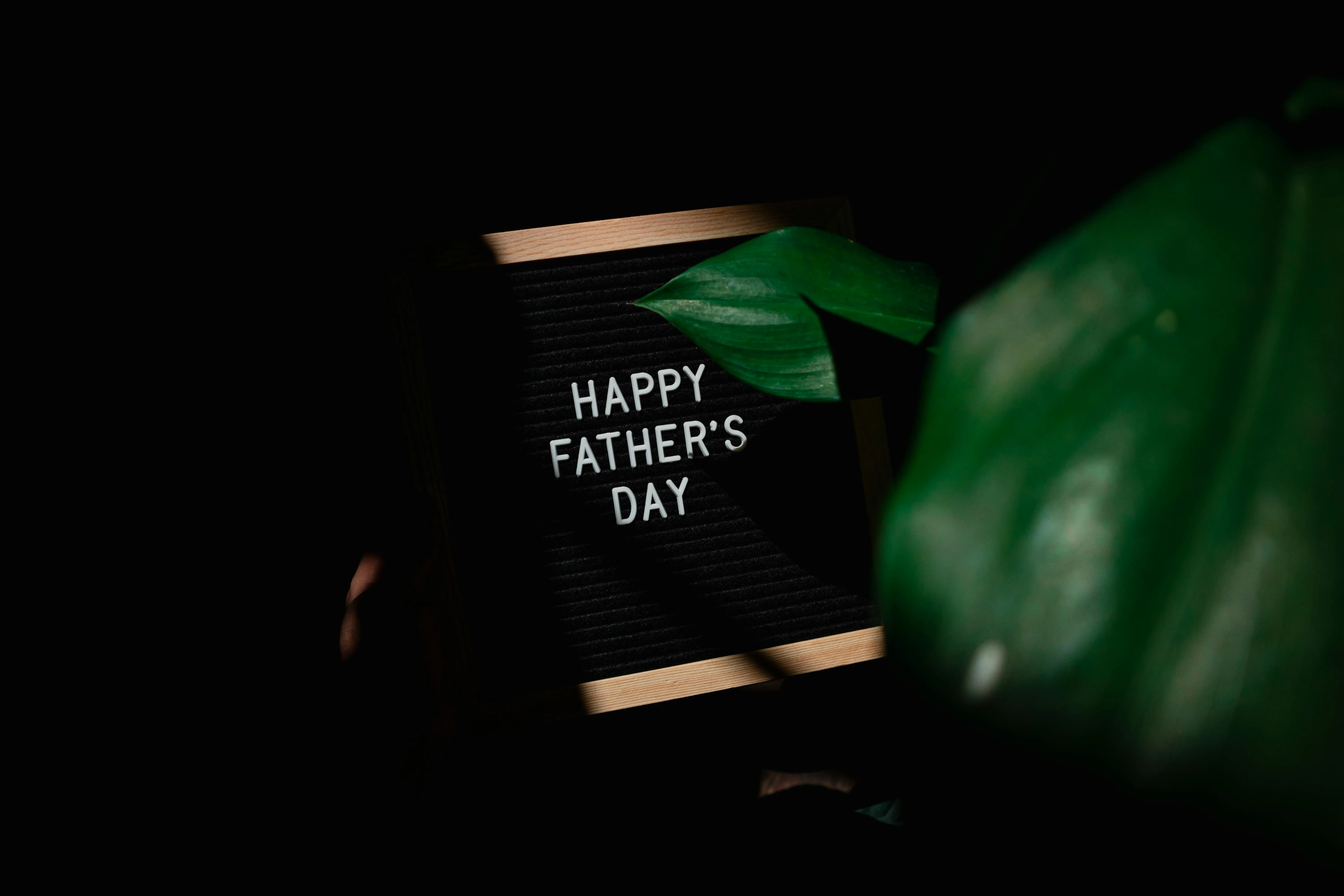
My father does not ask for much.
He never has. In 35 years of watching him — the way he moves through life with a particular quietness, the way he has always been present at the important moments without making a production of being present, the way he has given advice only when asked and asked for very little in return — I have understood that his version of fatherhood is built on availability rather than performance.
He is available. That is the thing. When I needed help at 2 AM on an exam night, he was awake. When my first job interview was on the other side of UP and I needed someone to drive me, he drove. When I called from Delhi with nothing specific to say — just the need to hear a familiar voice — he talked for an hour about nothing in particular and made the nothing feel like something.
I have been thinking about how to adequately acknowledge this kind of fatherhood. Not the dramatic gesture version — the surprise trip abroad, the expensive watch, the public declaration. But the steady, unhurried, always-available version that most Indian fathers practice and that most Indian children only fully understand when they are adults themselves.
Father's Day 2026 falls on Sunday, June 21st.
It is not an ancient festival. It is not tied to any religious tradition. It is simply a day — chosen, designated, and increasingly observed in India — on which we are asked to stop and acknowledge the person whose availability has been so constant that we have perhaps stopped noticing it.
This guide covers everything about Father's Day 2026 — the history, the date, how India celebrates it, what to give, where to take your father, and what to cook for him. And underneath all of it, one central argument: the finest Father's Day gift is not a thing. It is time. Specifically, your undivided time — the exact thing he has always given you.
Father's Day 2026 — Date and Day
Father's Day 2026: Sunday, June 21, 2026
Father's Day is celebrated on the third Sunday of June each year — which in 2026 falls on June 21st.
This is consistent across most countries that observe the day — including India, the United States, the United Kingdom, Canada, and most of South and Southeast Asia. A few countries have different dates (Germany celebrates it on Ascension Thursday; Russia has a Defender of the Fatherland Day in February) but for India and most of the world, the third Sunday of June is the date.
Mark it now. June 21st, 2026. Put it in your phone. The day is 17 days away as this is written — enough time to plan something genuinely good rather than reaching for whatever is convenient at the last minute.
The History of Father's Day — How a Daughter's Idea Became a Global Occasion
Father's Day has a specific and documented origin, unlike many holidays whose beginnings are vague.
In 1909, a woman named Sonora Smart Dodd in Spokane, Washington, USA, was sitting in church listening to a Mother's Day sermon. She thought about her father — William Jackson Smart, a Civil War veteran who had raised six children alone after his wife died in childbirth. She thought that if mothers deserved a day of recognition, fathers deserved one too.
She petitioned local churches, the YMCA, and government officials. The first Father's Day celebration was held in Spokane on June 19, 1910 — Sonora chose June because it was her father's birth month.
The idea spread slowly. It was declared a national holiday in the United States by President Richard Nixon in 1972 — more than 60 years after Sonora first proposed it. The delay is worth noting: it reflects a cultural hesitation, visible across many societies, to formally acknowledge fatherhood with the same warmth extended to motherhood. Fathers are supposed to need less acknowledgement. This is, most children eventually realise, not quite accurate.
In India, Father's Day began gaining visibility in the 1990s and 2000s, accelerating with the growth of social media and e-commerce. It is not a public holiday and has no religious or cultural foundation — it is simply a day that has been adopted into the Indian calendar as an occasion to acknowledge fathers, and its observance grows each year.
The commercial dimension of the day (the gift industry, the greeting card industry, the restaurant industry) is real and significant. But so is the genuine impulse that Sonora Smart Dodd had in 1909: if we set aside a day to say thank you, I see what you have given, the fathers who have never asked for acknowledgement will receive something they did not know they needed.
How India Celebrates Father's Day
India's celebration of Father's Day is young, enthusiastic, and evolving rapidly. No single tradition has established itself — instead, a range of practices have emerged from different communities and family types.
Social media tribute posts are the most widespread form — photographs of fathers with their children, captions that range from the brief ("Happy Father's Day Papa") to the genuinely moving (family stories that become the most-shared posts of the day). On any Father's Day, Indian social media fills with these tributes in a way that reflects genuine feeling rather than purely commercial performance.
Family meals — the most consistent and most culturally rooted form of Father's Day celebration in India — typically centre on cooking the father's favourite dishes. This is deeply Indian: the expression of love through food is perhaps the most fundamental gesture in Indian domestic culture, and Father's Day gives it a specific occasion.
Outings and day trips — to a restaurant the father enjoys, to a place he has wanted to visit, to a film he wants to see — are increasingly common in urban India, where the middle class has the resources and the habit of marking occasions with experiences rather than (or in addition to) gifts.
Gift-giving — particularly in urban families — has grown significantly with the rise of e-commerce. Books, clothing, grooming products, gadgets, personalised items, and experience gifts (spa treatments, cooking classes, travel experiences) are all popular.
Handmade gestures — particularly from younger children — are the form most consistently described by parents as most meaningful: the drawing that took an afternoon, the letter that was written and rewritten, the breakfast that was slightly burned but carried carefully into the bedroom on a tray.
The most important thing to understand about how India celebrates Father's Day: there is no wrong way. Whatever your family does — quiet, elaborate, simple, expensive, handmade — the day's purpose is the acknowledgement. The form of the acknowledgement is secondary to its sincerity.
What to Give Your Father on Father's Day 2026
The gift problem is real. Fathers are, as a category, among the most difficult people to buy gifts for — often because they express few wants, are likely to say "don't spend money", and genuinely mean it.
Here is a framework for thinking about Father's Day gifts that moves beyond the standard lists.
The Experience Gift — The Most Valuable Category
Time with you, doing something he enjoys, is the gift most consistently reported by fathers as most meaningful.
What does your father actually enjoy doing? Not what he says he enjoys — what have you observed him enjoying, with genuine engagement and pleasure?
If he loves cricket, get tickets to a match and go with him. Not to give him tickets — to go with him, to sit beside him, to watch him watch the game. The thing you are giving is your afternoon, your full attention, your willingness to be fully present in something he loves.
If he loves a particular type of food, take him to the finest version of that food you can find in your city. Not a restaurant you like — a restaurant that serves what he likes best. Let him order. Watch him enjoy it.
If he has mentioned wanting to visit somewhere — a pilgrimage site, a historical place, a city he has not been back to since childhood — plan that trip. It need not happen on Father's Day itself; the gift on the day can be the itinerary, the bookings, the knowledge that it is planned and he only needs to show up.
The Practical Gift — Done Well
Practical gifts, done with genuine thought, are the gifts most likely to be used and appreciated by fathers who consider themselves non-materialistic.
Books — if he reads. Not a random book, not a bestseller you heard about — the specific book about the subject he has been interested in for years, the biography of the historical figure he mentions repeatedly, the novel by the author you know he reads. The specificity is the gift.
Quality over novelty — a good pen if he writes, a fine wallet if his is worn, a quality shaving kit if he takes care of his appearance. The upgrade to something he uses daily is more valuable than something new and unused.
A subscription — to a streaming service with content he enjoys, to a magazine about his interests, to a music platform if he loves particular genres.
The Handmade and Personal — The Most Remembered
A letter — an actual written letter, not a WhatsApp message, describing specifically what you appreciate about him and what you have learned from watching how he has lived — is the gift most likely to be kept, re-read, and mentioned years later.
The letter does not need to be long. It needs to be honest. Tell him one specific thing you have watched him do that shaped who you are. Tell him one moment you remember that he may have forgotten. Tell him that you see what he has given.
A photograph album or book — a curated collection of family photographs from his life, printed and bound — is a gift of memory, of attention to the archive of your shared life.
His favourite food, made by you — see the next section.
What to Cook for Your Father on Father's Day 2026
Food is love in the Indian family, and Father's Day is the occasion to cook specifically for your father's tastes rather than the household's general preference.
The most important principle: cook what he loves, not what you think is impressive. If his favourite meal is simple dal-chawal with ghee and a papad, make that dal-chawal with your complete attention. Buy good dal. Use proper ghee. Make the papad fresh. Set it out properly. The simplicity is not the constraint — the simplicity is the point.
Here are some classic dishes worth considering, with the approach that makes them genuinely excellent:
Dal Makhani — The Comfort Classic
The king of Indian restaurant dals is actually better when made at home — because you can give it the time it needs.
The key: Use whole black urad dal soaked overnight, cook it for at minimum 3 hours on low heat (ideally 6-8 hours), and add the cream and butter at the end rather than cooking them in from the start. The long slow cook breaks down the dal's starches into a rich, thick gravy that no restaurant version — which shortcuts with pressure cooker and quick cook — quite replicates.
If your father is from North India, a bowl of properly made dal makhani with fresh roti and a smear of fresh white butter is a complete act of love.
Biryani — The Occasion Dish
Biryani is the celebration food of the Indian subcontinent and Father's Day deserves it.
Whether your family's tradition is the Hyderabadi dum biryani, the Lucknawi Awadhi version, the Kolkata biryani (with its potato), the Kerala biryani (with its short-grain rice and coconut influence), or any regional variation — the technique that matters most is the dum (the slow steam seal). The rice and the meat (or vegetables, for vegetarian versions) are layered in a sealed pot and cooked on very low heat for 20-30 minutes after the initial preparation, allowing the flavours to complete their merger without rushing.
The biryani your father ate as a child, or at his mother's table, is the biryani worth replicating. Ask him. He will tell you what he remembers most vividly.
The Childhood Favourite — Whatever That Is
Every father has a food from his childhood that he mentions with a particular quality of voice — not hunger exactly, but something closer to longing. It might be a street food from the city he grew up in that is not available where he lives now. It might be a preparation his mother made that nobody else has made quite the same way. It might be something entirely simple — a particular type of sweet, a specific snack, a dish from his home region.
Ask him. Find the recipe. Make it as close as you can. The effort of the research — asking relatives, looking up regional recipes, testing the preparation — is itself the gift. The fact that you tried, that you went to the trouble of finding what he actually loves rather than guessing, is what he will remember.
The Special Breakfast — The Simplest Grand Gesture
The breakfast in bed or breakfast table preparation — made before he wakes, waiting when he comes down — is the Father's Day gesture most consistently described by recipients as deeply touching precisely because of its timing. It requires waking earlier than usual, preparing before the day has started, and communicating through the act: I thought about you before I thought about myself today.
Whatever your family's breakfast tradition — aloo paratha with white butter and pickle, poha with tea, idli with fresh sambar, puri bhaji, bread omelette with chai — make it before he wakes. Set the table. Put out fresh flowers if you have them. Wait for him.
Best Places to Take Your Father on Father's Day 2026
Father's Day 2026 falls on June 21 — which is solidly in the Indian summer-monsoon transition period. Planning where to take your father depends on your location and his preferences. Here are options for different situations.
For Fathers Who Love History and Heritage
Agra — if you are in North India and he has not seen the Taj Mahal recently (or at all). The Taj at dawn in June, before the heat builds, is among the finest experiences available in India. Combine with the Agra Fort for a full day of Mughal history.
Old Delhi — Jama Masjid, Chandni Chowk, Red Fort, and a proper Mughal meal at Karim's (one of the oldest restaurants in Delhi, established 1913, serving the finest nihari and mutton preparations in the city). For a father who loves history and food, Old Delhi is a complete experience.
Lucknow — if he is from UP or loves the Nawabi tradition. The Bara Imambara (one of the finest examples of Awadhi architecture, with its labyrinthine bhulbhulaiya), the ghats of the Gomti, and the old city's kebab and biryani trail.
For Fathers Who Love Nature
Jim Corbett National Park (Uttarakhand) — open until mid-June (check exact closure date for 2026). The final safari of the season, with the pre-monsoon forest and the Ramganga River, is a genuinely excellent wildlife experience.
Nainital (Uttarakhand) — a June day at the lake, a boat ride, the toy train to Snow View Point, and dinner by the lake. Accessible from Delhi in 6-7 hours and genuinely pleasant in June's pre-monsoon warmth.
Mahabaleshwar (Maharashtra) — if you are in Maharashtra or Gujarat. The hill station in June, before the full monsoon arrives, has cool temperatures, fresh strawberries, and the dramatic escarpment views that the summer season shows at their finest.
For Fathers Who Love Food
A restaurant that serves his specific regional cuisine — properly. The finest Hyderabadi biryani in your city if he is from Andhra. The best Rajasthani dal-baati-churma if he is from Rajasthan. The most authentic Bengali fish curry if that is his tradition.
The specificity matters more than the prestige of the restaurant. A genuinely good version of the food he grew up eating will mean more than an expensive restaurant that serves generalised "Indian cuisine."
For Fathers Who Want Peace and Rest
Nothing requiring a significant journey — a slow morning at home with his favourite breakfast, the afternoon watching a film or a cricket match together, a simple meal in the evening. Not every father wants an outing. Some of the finest Father's Days are spent in the complete, unhurried domesticity of a family day that belongs entirely to him.
Ask him what he wants. He may surprise you. And whatever he says — do that.
Father's Day Gift Ideas for Every Budget
Under ₹500: A handwritten letter (the most valuable gift in this guide, regardless of its zero cost). A personalised Father's Day card with a specific memory written inside. His favourite local sweet from the best shop in your area.
₹500 – ₹2,000: A good book about his interests. A quality wallet, belt, or pen. A framed photograph of a family moment he treasures. A home-cooked meal of his absolute favourite dishes, laid out properly.
₹2,000 – ₹5,000: A dinner for two at a restaurant that serves his favourite cuisine. A personalised photo book of family photographs. A subscription to a streaming service with content he enjoys. Quality clothing — a kurta he would choose, a formal shirt for office use.
₹5,000 – ₹15,000: A day trip to a historical or natural destination within driving distance. A spa or wellness experience (many fathers who would never book this themselves appreciate it greatly when given). A high-quality grooming kit. A smartwatch or fitness tracker if he is health-conscious.
₹15,000 and above: An overnight or weekend trip to a destination he has mentioned wanting to visit. A pilgrimage to a site that is significant to him. A high-quality piece of jewellery or watch that he will wear for decades.
The most important principle at every budget level: Specificity. The gift that shows you paid attention to what he specifically loves is worth more than the expensive gift that could have been given to anyone.
A Note on Indian Fathers Specifically
The Indian father — particularly of the generation that is now in its 50s, 60s, and 70s — often operates within a tradition of emotional restraint that can make him appear to need less acknowledgement than he does.
He may say "don't spend money on all this" and mean it literally. He may deflect a compliment with a joke. He may receive a gift with a nod rather than effusion. He may not know how to be the recipient of deliberate, focused appreciation because his entire adult life has been oriented toward giving it rather than receiving it.
None of this means the acknowledgement is unwelcome.
It means it will be received quietly — held privately, thought about later, mentioned to someone else in a context you will not witness. The Indian father who seems unmoved by Father's Day is often the one who mentions it to his friends the following week, who keeps the letter you wrote in the drawer where he keeps important things, who is quietly grateful for the acknowledgement in ways that do not surface immediately.
Give him the time. Cook him the food. Write him the letter. Take him somewhere he has been wanting to go.
He will not make a fuss. That is not how he is built. But he will remember.
Frequently Asked Questions About Father's Day 2026
Q: When is Father's Day 2026 exactly? Father's Day 2026 falls on Sunday, June 21, 2026 — the third Sunday of June, as observed in India, the United States, the United Kingdom, and most countries that celebrate the day.
Q: Is Father's Day a public holiday in India? No — Father's Day is not a public holiday in India. It is an observed occasion without legal status, similar to Valentine's Day or Mother's Day. Offices, schools, and businesses operate normally. The day is marked through personal and family celebration rather than official observance.
Q: When did India start celebrating Father's Day? Father's Day has been observed in India since at least the 1990s, gaining significant momentum in the 2000s with the growth of the middle class, the expansion of e-commerce and gifting culture, and the influence of social media. The exact date of adoption is not documented — it entered the Indian cultural calendar gradually rather than through any specific event.
Q: What is the best last-minute Father's Day gift if I have forgotten to plan? Your time and attention, delivered with sincerity. A phone call that is not rushed, asking specifically what he remembers about a particular moment you shared. A meal you cook for him today. A letter written this morning. The best gifts for fathers are not contingent on advance planning — they require only the decision to be present and to acknowledge what he has given.
Q: How is Father's Day different from traditional Indian festivals honoring fathers? Traditional Hindu traditions include Pitru Paksha (the 16-day period for ancestral remembrance, including fathers who have passed away) and various regional practices of seeking elders' blessings. These traditions are oriented toward ancestral piety and spiritual merit. Father's Day is more intimate and personal — it is addressed to the living father, in the specific relationship of a child to a parent, as a simple act of gratitude and acknowledgement.
Conclusion — The Steady Presence
My father drove me to my first job interview in Delhi at 4 AM because the interview was at 9 AM and the train would not have arrived in time. He drove four hours, waited in the car while I went in, and drove four hours back. He did not mention it afterward. I did not think to mention it either, at the time.
I think about it now.
The list of things my father has done that I did not thank him for, at the time, is longer than I am comfortable acknowledging. Not because I was ungrateful — because his presence was so constant and so reliable that I absorbed it as a given rather than as a gift. The way you absorb sunlight without thanking the sun.
Father's Day asks us to stop absorbing and start thanking. To make visible, for one specific Sunday, the gratitude that exists continuously but is rarely spoken.
June 21, 2026. The third Sunday of June.
Call him. Cook for him. Write him the letter. Take him somewhere he has been wanting to go. Or simply sit beside him for a few hours with your phone put away, fully present in the way he has always been fully present for you.
He will not ask for much. He never does.
Give him more than he asks for anyway.
Happy Father's Day 2026.
Enjoyed this article? You might also like:
How does your family celebrate Father's Day? What is the gift or gesture your father has mentioned or remembered most? Share in the comments — Father's Day stories are the best kind.
Disclaimer: This article is for informational purposes only and does not constitute professional advice. Read our full Disclaimer.



Recent Comments
No comments yet.