
June in India has a reputation problem.
Most travel advice about June in India is essentially a single sentence repeated in different ways: don't go anywhere, the monsoon is arriving, stay home until October. This advice is not wrong exactly — parts of India in June are genuinely difficult to travel through, the plains are hot, and the early monsoon rains make some destinations impractical.
But it misses something important.
June is the month when certain parts of India become more beautiful, not less. When the Western Ghats burst into a green so intense it almost hurts to look at directly. When Meghalaya's waterfalls reach their first dramatic peak before the full monsoon volume arrives. When the Himalayan hill stations — Shimla, Mussoorie, Dharamshala — are pleasantly cool while the plains from which visitors come are sweltering at 44 degrees. When Spiti Valley's brief summer window is fully open, the passes accessible, the landscape extraordinary in its stark clarity.
The mistake is treating India as a uniform geographical space where one monsoon arrives simultaneously everywhere and ruins everything simultaneously. India spans 3,000 kilometres from north to south and contains dozens of distinct climatic zones. The monsoon arrives at different times in different places. Some destinations are specifically at their best during and around the monsoon. Others are entirely unaffected by it.
This guide covers the 10 best places to visit in India in June 2026 — destinations that are genuinely good in June, with honest reasons why, and the practical information to make the trip worthwhile.
Why June? Understanding the Indian Monsoon Geography
The Southwest Monsoon — the seasonal reversal of wind direction that brings rain to most of India between June and September — does not arrive everywhere at once.
It arrives in Kerala first (around June 1st), then moves northward and eastward over the following weeks. Mumbai receives it around June 10-15. Delhi and the rest of the North Indian plains receive it in late June or early July.
This progression means that:
Destinations in the far northwest (Ladakh, Spiti, Lahaul) are largely sheltered by the Himalayan rain shadow — they receive very little monsoon precipitation and are at their most accessible precisely during the June-September window when the passes are open.
Himalayan hill stations (Shimla, Manali, Mussoorie, Nainital, Dharamshala) are genuinely pleasant in June — cool, sometimes rainy, occasionally misty — but comfortable compared to the plains below and significantly less crowded than the peak summer months of April-May (before school closes) and July-August (school holidays).
Western Ghats destinations (Coorg, Wayanad, Munnar, Lonavala) receive heavy rain from June onward — but this rain is precisely what makes them so extraordinarily green and the waterfalls so powerful. Experienced travellers know that the Western Ghats in monsoon is one of the finest landscape experiences in India.
Northeast India (Meghalaya, Assam, Sikkim) receives heavy rain in June — but Meghalaya's waterfalls and the Kaziranga grasslands are at their most dramatic in this period.
1. Leh-Ladakh — The High Desert at Full Summer
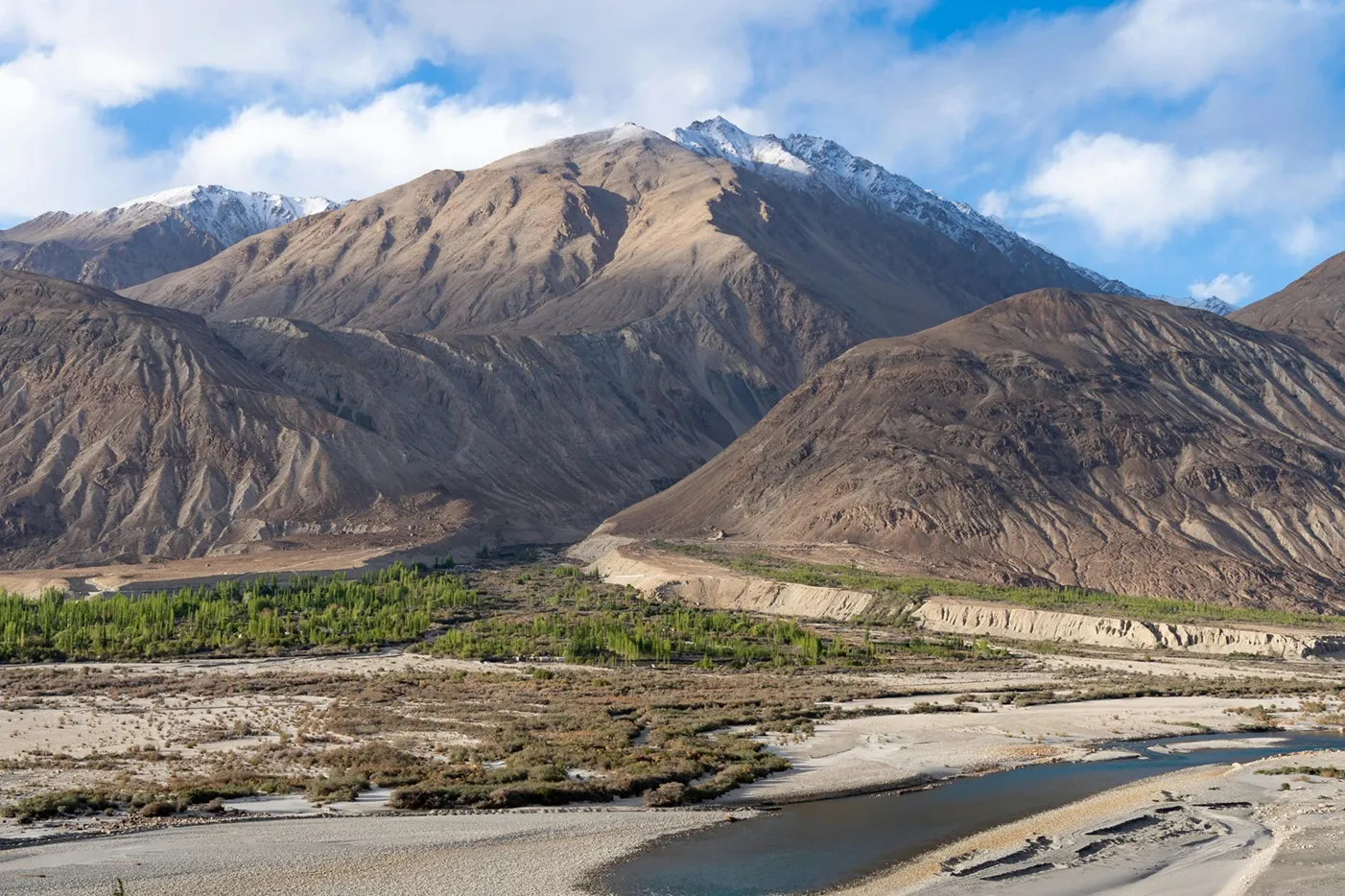
Leh and Ladakh — at 3,524 metres and above, in the rain shadow of the Himalaya — are at their most accessible and their most beautiful in June.
The Manali-Leh Highway (via Rohtang Pass and Baralacha La) typically opens in late May and is fully reliable by June. The Srinagar-Leh Highway is open from March-April. Both routes bring visitors into a landscape that the monsoon barely touches — Ladakh receives less than 100mm of annual precipitation, and June is a month of clear skies, intense high-altitude sun, and the dramatic contrasts of snow-dusted peaks above barren brown valleys.
What June specifically offers: The snow of winter is retreating but still visible on the high peaks. The apricot orchards of the Indus valley villages are in full green leaf (the blossoms were in April; the fruit comes in July-August). The high-altitude lakes — Pangong (4,350 metres), Tso Moriri (4,500 metres) — are ice-free and at their most brilliantly blue. The monastery festivals — several monasteries hold their annual tsechu festivals in June, including Hemis Festival (June 29-30 in 2026, one of Ladakh's most spectacular) — are at their most accessible.
Hemis Festival 2026 (check exact dates annually) — the annual masked dance festival at Hemis Monastery, the largest monastery in Ladakh — is one of the finest cultural events in the Indian Himalaya. The cham (masked sacred dance) performances, the monastery's dramatic position, and the gathering of monks and pilgrims from across the Ladakhi landscape make it genuinely worth timing a June visit around.
Temperature in June: 10–28°C in Leh (significant daily variation — cold nights, warm days). High passes are colder; carry warm layers regardless of daytime warmth.
Practical: Book accommodation 2-3 months in advance for June, which is the peak season for Ladakh. Acclimatise properly — minimum 2 full rest days in Leh before any excursion to higher points.
2. Spiti Valley, Himachal Pradesh — The Window at Its Widest
Spiti Valley — the high-altitude cold desert at 12,500 feet — is at its most accessible precisely during the June-September window, when the passes are open and the valley's brief summer is fully underway.
June in Spiti brings something the valley does not have for most of the year: colour. The barren brown and ochre of the winter and spring landscape acquires patches of green as the snow-fed streams irrigate the small village fields. The Pin Valley National Park — accessible from Spiti during summer — supports snow leopards and Himalayan ibex in its high-altitude terrain. The wildflowers on the valley slopes peak in July but begin in June, and the monastery festivals — Key Monastery holds its annual festival in June — are accessible with the passes open.
The Chandratal Lake (the Moon Lake, 4,250 metres) — one of the finest high-altitude lakes in India — is accessible by road from late May, and June visits catch the lake at its finest pre-summer clarity before the August trekking crowds arrive.
Temperature in June: 5–20°C. Cold nights are guaranteed at this altitude — sleeping bag and warm layers are essential.
Why June specifically: The window between the pass opening (late May) and the main tourist season peak (July-August) gives June visitors the finest conditions with minimum competition for accommodation and routes.
3. Shimla and the Himachal Hill Stations — Pleasant While the Plains Burn
Shimla (2,206 metres), Manali (2,050 metres), Dharamshala (1,457 metres), and Dalhousie (2,036 metres) are all significantly more pleasant in June than the North Indian plains from which most visitors come.
While Delhi is at 44 degrees and Lucknow is at 42 degrees and Chandigarh is at 40 degrees, Shimla is at 18-25 degrees. The math is simple and compelling.
June in Shimla: The pre-monsoon warmth and the early monsoon cloud give the town a pleasant, slightly misty quality. The Kalka-Shimla toy train journey — 96 km through tunnels and over bridges — is particularly atmospheric in the light cloud of early monsoon. The rhododendrons are past their peak (that was April) but the oak and deodar forests are their deepest green.
June in Manali: The Solang Valley paragliding and adventure season is in full swing. The Beas River is running fast with snowmelt — rafting conditions are at their most exciting (and most challenging — go with certified operators only). Rohtang Pass (3,978 metres) is open with a permit and the snowfields at the pass are a popular day excursion.
June in Dharamshala: The Tibetan Buddhist calendar has several significant events in June. The Dalai Lama is often in residence in June before travel in the later summer months. The Triund Trek — the most popular day trek from McLeod Ganj — is green and lush in early June before the heavier monsoon arrives.
Temperature in June: 15–25°C (Shimla, Dalhousie), 12–22°C (Manali), 18–28°C (Dharamshala).
Note: The Himachal hill stations experience increasing rain through June — by late June, the monsoon is typically arriving. Pre-book accommodation, carry rain gear, and be flexible about outdoor plans.
4. Nainital and Kumaon — The Lake District at Its Greenest
Nainital (2,084 metres), Bhimtal, Sattal, and the broader Kumaon lake district of Uttarakhand are excellent destinations in June — cool, green, and significantly less crowded than the May peak season (when the summer school holiday rush has ended by mid-June).
The Kumaon hills receive the monsoon in late June-early July. The first three weeks of June give excellent weather — warm enough to enjoy the lakes and the hill walking, cool enough to be a genuine escape from the plains.
Nainital Lake in June — the rowboats on the water, the forested hills around the lake still in their pre-monsoon green — is at its most photogenic. The Naina Devi Temple above the lake, the Snow View Point (reachable by ropeway), and the walks around the lake circuit are all comfortable in June's temperatures.
Mukteshwar (2,286 metres, 51 km from Nainital) — a quieter hill destination with views of the Himalayan range and the finest apple orchards in Kumaon — is an excellent June alternative to the more crowded Nainital main town.
Jim Corbett National Park — at the base of the Kumaon hills — is officially closed during the monsoon (June-October), so wildlife viewing is not the June focus here.
Temperature in June: 14–24°C.
Practical: Book Nainital accommodation early for the first two weeks of June — the post-exam school holiday crowd is present until mid-June, then thins considerably.
5. Coorg, Karnataka — The Coffee Estates in the Pre-Monsoon Rain
Coorg (Kodagu) — in the Western Ghats of Karnataka — is one of those destinations that experienced travellers specifically seek out in June, knowing that the monsoon-season Coorg is dramatically more beautiful than the October-March version that most visitors see.
The coffee estates of Coorg — green year-round — take on an additional quality in June when the pre-monsoon and early monsoon rain arrives: the mist, the sound of rain on the coffee plants, the waterfalls building in volume on the surrounding hills. Abbey Falls in June is significantly more powerful than its October appearance. The forest trails through the Brahmagiri hills are lush and bird-rich.
The Abbey Falls trail in early monsoon is one of the finest wet-season walking experiences in South India — the forest closing in overhead, the trail slick and fragrant, the falls audible long before they are visible.
Coorg homestays in June often discount rates — the monsoon is nominally the off-season, and the best homestays (which are genuinely excellent) are available at 30-40% below their peak prices.
Temperature in June: 18–28°C. Rain gear and waterproof footwear are necessary — not optional.
6. Wayanad, Kerala — The Monsoon Arrives and the Forest Transforms
Wayanad — the Western Ghats district of northern Kerala — receives the monsoon in early June and transforms completely.
The Chembra Peak trek (in June, requiring guide and permit) passes through misty grassland and subtropical forest that is at its most vividly alive in the monsoon. The Edakkal Caves are accessible year-round and the dramatic stone gorge setting is enhanced by the monsoon mist. The wildlife of Wayanad Sanctuary — elephants, leopards, the lion-tailed macaque — is active and present; the forest drives at dawn are particularly productive in June when animals seek water.
Soochipara Falls (Senator Falls) — in the forest above Kalpetta — is at its most dramatic in June, the volume enormous and the surrounding forest intensely green. The pool at the base, fed by the falls, is cold and deep.
The homestay experience in Wayanad — staying in a family-run plantation homestay, eating home-cooked Keralite and Adivasi food, walking in the rain through the coffee and pepper estates — is at its most authentic in June when the tourist volume is lower and the hosts have more time for genuine interaction.
Temperature in June: 18–28°C. The monsoon rain in Wayanad is persistent — plan accordingly.
7. Meghalaya — The World's Wettest Place in Its Most Dramatic Month
Meghalaya — specifically Cherrapunji and Mawsynram — is one of the most counterintuitive June travel recommendations in this guide, and the most rewarding for those who embrace it.
Cherrapunji (Sohra) is one of the wettest inhabited places on Earth — and June is when the monsoon begins turning the statistics into reality. The waterfalls are building: Nohkalikai Falls (340 metres, India's tallest plunge waterfall) in June is approaching its maximum volume, the white curtain descending from the plateau edge into the turquoise pool with a power and a sound that is genuinely overwhelming. Seven Sisters Falls is in full flow.
The living root bridges of Nongriat are accessible year-round — the 3,500-step descent is wet and requires grip, but the bridges themselves are part of a living forest that is most alive in the monsoon. The root bridge pool below the Double Decker Bridge is full and swimmable in June.
Dawki in June — the Umngot River runs higher and less transparent than in the dry months, but the surrounding landscape of the border hills is at its most intensely green.
Shillong in June is cool (15–22°C) and occasionally rainy — the rock music venues are as active as ever, the Don Bosco Museum is accessible regardless of weather, and the pre-monsoon walk around Ward's Lake in the misty Shillong air is genuinely pleasant.
What to expect: Rain. Carry serious rain gear. Accept the rain as part of the experience rather than an obstacle to it. The Meghalaya that most travellers see in the dry season is beautiful. The Meghalaya in June is extraordinary in a completely different way.
8. Darjeeling and Sikkim — Tea, Mist and Himalayan Drama
Darjeeling (2,042 metres) and Sikkim are excellent June destinations — the rain arrives but the hill landscapes are dramatically enhanced by cloud and mist.
The Darjeeling Himalayan Railway (toy train) in June, running through cloud-forest with mist in the valleys — is arguably more atmospheric than the clear-sky October version. The tea estates in June have completed the spring first flush and are in the period between flushes — the estates are green and the processing factories are active.
Gangtok (Sikkim's capital) and the Yumthang Valley (north Sikkim) are accessible in June before the monsoon closes higher-altitude roads in July-August. The rhododendron forests of Sikkim, past their peak bloom (April-May) but still intensely green, and the Rumtek Monastery near Gangtok are accessible regardless of weather.
Tiger Hill sunrise viewing at Darjeeling is cloud-dependent in June — Kanchenjunga appears on clear mornings, which are more frequent in early June before the full monsoon arrives. The lottery of the June Tiger Hill sunrise — will the clouds part or won't they — is part of the experience.
Temperature in June: 14–22°C (Darjeeling), 15–24°C (Gangtok). Warm layers for mornings and evenings are necessary.
9. Goa — The Monsoon Season's Secret Appeal
Goa in June is a place most tourists have left — and a place that reveals a completely different, and in many ways more interesting, version of itself.
The monsoon arrives in Goa around June 10th with characteristic drama — a day of sudden darkening sky, the first heavy rain, the sea rising and turning rough and impressive. From that point, the beach shacks close, most tourists depart, and the coastal state settles into its own monsoon rhythms.
For visitors willing to accept that June Goa is not beach-holiday Goa, what remains is remarkable.
The local food culture is most visible in June — the beach shack overlay disappears and the authentic Goan Catholic restaurants and home kitchens are the primary food option. Fish curry rice from a Goan family restaurant in June is made with the exact fish the local fishing boats brought in that morning, because the tourist demand for other things has vanished.
Old Goa (the UNESCO churches) is peaceful — the visitor numbers have dropped to a fraction of the December peak, and you can stand in front of the Basilica of Bom Jesus for extended periods without negotiating around tour groups.
Panaji's Fontainhas quarter in June rain — the Portuguese villas in their mustard and terracotta and cobalt colours made more vivid by the wet — is one of the finest heritage-area-in-rain experiences in India.
Dudhsagar Falls — on the Goa-Karnataka border, the waterfall that the Konkan Railway viaduct passes over — is at its most dramatic in June, the volume enormous and the surrounding forest intensely green. The jeep safari access (when road conditions allow) in early June produces the finest Dudhsagar experience of the year.
Temperature in June: 26–32°C, high humidity. Goa is warm and wet in June — not the beach weather of December but comfortable for exploration.
10. Mussoorie and Rishikesh — The Gateway to Garhwal in Early Monsoon
Mussoorie (2,005 metres) — the closest major hill station to Delhi (290 km, 6-7 hours) — and Rishikesh (372 metres, on the Ganga at the Himalayan foothills) together provide the most practical June escape from the capital.
Mussoorie in June is 10-12 degrees cooler than Delhi at its hottest, with the mall area and viewpoints offering the classic hill station respite from the plains. The Kempty Falls — 15 km from Mussoorie, a broad cascade popular with day visitors — is at its best flow in June. Cloud's End (the western tip of Mussoorie's ridge) and Gun Hill (the highest point on the ridge, reachable by ropeway) give the finest views of the Doon Valley and the Himalayan foothills.
Rishikesh in June is the most interesting because the Ganga is beginning to run full from the Himalayan snowmelt and early monsoon. White-water rafting on the Ganga in June — the river fast and full — is excellent for Grade III-IV rapids from Shivpuri to Rishikesh. The river's force in June makes the rafting experience more intense than the calmer October-November version.
The evening Ganga aarti at Triveni Ghat and Parmarth Niketan in Rishikesh — lamps and mantras and the sound of bells on the river bank as the full Ganga flows past — is one of the finest pilgrimage-town evening experiences in India, available year-round and particularly atmospheric in June when the river is at its most powerful.
Temperature in June: 18–28°C (Mussoorie), 28–38°C (Rishikesh — warm but considerably less severe than Delhi).
My Personal Pick for June — Spiti Valley
If I could go anywhere in India in June, I would go to Spiti.
I made a June trip to Spiti three years ago — the timing accidental, a planned May trip pushed back by work. I had been concerned about arriving too early, before the valley had fully warmed, before the flowers had started.
What I found was the valley in the precise week of its most dramatic transition: the snow retreating from the lower slopes, the streams running fast from the melt, the first patches of green grass appearing in the otherwise barren terrain around the villages, and Key Monastery — perched on its rock pinnacle above the valley — catching the morning light in a way that the summer haze of August slightly reduces.
On the second morning, I was at the monastery for the dawn puja. The monks were assembling in the main hall as the first light came over the eastern ridge. The sound of the long horns (dungchen) beginning as the sun touched the monastery's wall. The cold still significant — breath visible, fingers cold in the thin air.
The head monk, an elderly man who had been at Key his entire life, walked past me in the courtyard after the puja. He paused and looked at me — a visitor in June, when most tourists had not yet arrived — and said in precise English: "You came in the quiet month. Good."
The quiet month. I have thought about that phrase since. Most of India's finest places have a quiet month — a window before the rush, when the place is most itself. June is Spiti's quiet month. And the quiet, as the monk implied, is the point.
Quick Reference — June 2026 India Travel Summary
| Destination | June Temperature | Monsoon Status | Best For | Crowd Level |
|---|---|---|---|---|
| Leh-Ladakh | 10–28°C | Minimal (rain shadow) | Festivals, lakes, passes | Medium (peak season) |
| Spiti Valley | 5–20°C | Minimal (rain shadow) | Monasteries, trekking | Low (quiet month) |
| Shimla/Manali | 15–25°C | Beginning mid-June | Hill escape, adventure | Medium |
| Nainital/Kumaon | 14–24°C | Beginning late June | Lakes, hill walking | Medium |
| Coorg | 18–28°C | Arrived June 1 | Coffee estates, waterfalls | Low |
| Wayanad | 18–28°C | Arrived June 1 | Forest, wildlife, homestays | Low |
| Meghalaya | 15–25°C | Arrived/building | Waterfalls, root bridges | Low |
| Darjeeling/Sikkim | 14–24°C | Arrived mid-June | Tea estates, mist, culture | Low-Medium |
| Goa | 26–32°C | Arrived ~June 10 | Heritage, local culture | Very Low |
| Mussoorie/Rishikesh | 18–38°C | Beginning late June | Hill escape, rafting | Medium |
Frequently Asked Questions About June Travel in India
Q: Is the monsoon a reason not to travel in June, or can it enhance the experience? Both, depending on the destination. For beach activities, the monsoon is genuinely limiting — the sea is rough and swimming is not safe in many coastal areas. For landscape, wildlife, and cultural experiences, the monsoon is often an enhancement: the waterfalls are more powerful, the forests are more vivid, the crowds are smaller, and the prices are lower. The key is matching the destination to what the monsoon does for it rather than to it.
Q: Which Indian destinations should I absolutely avoid in June? The North Indian plains (Delhi, Agra, Jaipur, Varanasi, Lucknow) are genuinely unpleasant in June — temperatures of 40-45°C, the monsoon not yet arrived, maximum heat and humidity combined. Rajasthan (Jaisalmer, Jodhpur, Bikaner) is extremely hot. Andhra Pradesh and Telangana interiors are very hot. Wildlife safaris in Ranthambore, Bandhavgarh, Kanha (most reserves close July-October) are finishing in early June — check specific closure dates.
Q: Is June a good time for the Char Dham Yatra in Uttarakhand? June is acceptable for the Char Dham, but with cautions. The yatra season is open (May-October). However, June brings the beginning of the monsoon on the approach roads — landslide risk increases significantly, particularly on the Yamunotri and Kedarnath approach roads. Early June (first two weeks) is generally acceptable; late June carries more road-condition risk. Always check current road conditions before travel.
Q: What is the Hemis Festival in Ladakh and when exactly is it in 2026? Hemis Festival is the annual masked dance festival (tsechu) at Hemis Monastery — one of the most spectacular monastery festivals in the Indian Himalaya, celebrating Guru Padmasambhava (Guru Rinpoche). It falls on the 9th and 10th day of the 5th month of the Tibetan lunar calendar — typically late June or early July. Check the exact 2026 dates on the official Hemis Monastery or Ladakh Tourism website closer to your travel date, as the lunar calendar dates shift each year.
Q: How do I prepare for a June trip to a monsoon-affected destination? Pack serious rain gear — a proper waterproof jacket, not a light spray jacket. Waterproof footwear is worth investing in for any Western Ghats or Northeast India destination. Accept that some outdoor plans will be rained out and build alternative indoor/covered options into your itinerary. Book flexible cancellation accommodation where possible. Check road conditions (particularly for Himachal Pradesh hill destinations) 24-48 hours before each travel day.
Conclusion — June Is India's Most Interesting Travel Month
The conventional advice — stay home in June — assumes that all of India is the same place. It is not.
While one part of India is in the furnace of the pre-monsoon heat and another part is being thoroughly drenched by the arriving monsoon, a third part — the high-altitude cold deserts of Ladakh and Spiti, the cool hill stations of the Himalayan foothills, the transformed green of the Western Ghats — is precisely at its most accessible, its most beautiful, or its most interesting.
The monk at Key Monastery understood this. The quiet month is not the failing month. It is the month when the place is most itself, before the summer's main rush arrives and changes the quality of the experience with the weight of its numbers.
June rewards the traveller who is willing to go somewhere specific rather than somewhere popular. Ladakh's Hemis Festival. Spiti's quiet passes. Coorg in the first weeks of rain. Meghalaya's waterfalls are building toward their monsoon maximum. Goa's heritage without the tourist overlay.
Pack your rain jacket. Go in June.
The quiet month is waiting.
Enjoyed this article? You might also like:
- Best Places to Visit in India in May 2026: Hill Stations, Beaches, and Cool Escapes Before the Summer Peaks
- Kedarnath Yatra 2026: Complete Guide to the Trek, Temple, Helicopter, and the Journey That Changes You
Where in India are you travelling this June? Share your plans in the comments — and if you have discovered a June destination that most people overlook, share that too. The quiet month has secrets worth spreading.



Recent Comments
No comments yet.