

Somewhere right now, as you read this, a soldier is standing in the snow.
Not metaphorically. Literally. At a forward post in Siachen — the world's highest battlefield, where temperatures drop to minus 50 degrees Celsius and the altitude makes breathing itself an effort — an Indian Army soldier is standing guard. He has been awake for hours. His fingers are numb inside his gloves. His next hot meal is hours away. Behind him, thousands of kilometres away, his family is going about their day — his children getting ready for school, his wife making chai, his parents perhaps watching the morning news.
He knows none of that. He is watching the mountain.
January 15 is Indian Army Day — the one day in the year when India formally turns toward that soldier, and toward the 1.4 million men and women of the Indian Army like him, and says: we see you. We know what you do. And we are grateful.
This guide covers the full story of Indian Army Day 2026 — why it falls on January 15, the history of the Indian Army since independence, how the day is observed across the country, the remarkable roles the army plays beyond combat, and why every Indian citizen — not just those with family in the forces — has reason to mark this day with genuine awareness and respect.
Why January 15? The History Behind Indian Army Day
Indian Army Day is observed on January 15 every year because of what happened on that date in 1949 — a moment that was quiet in its ceremony but enormous in its meaning.
On January 15, 1949, Lieutenant General K.M. Cariappa took over as the first Indian Commander-in-Chief of the Indian Army, replacing the last British Commander-in-Chief, General Sir Francis Butcher.
For context: when India gained independence on August 15, 1947, the Indian Army was still under British command. British officers continued to hold the top positions in the armed forces for nearly two years after independence — a transitional arrangement that was practical but symbolically incomplete. India was free on paper. Its army was still being commanded by the colonial power.
January 15, 1949 ended that. The moment Cariappa took command, the Indian Army became fully, finally, and completely Indian — commanded by an Indian officer, answerable to the Indian Constitution, serving the Indian people.
Lieutenant General Kodandera Madappa Cariappa — later promoted to Field Marshal, the highest rank in the Indian Army — was a remarkable man. Born in Coorg (now Kodagu) in Karnataka in 1899, he had served in the Indian Army during both World Wars and was known for his exceptional professionalism, his strict personal discipline, and his deep commitment to the welfare of his troops. He was the first Indian officer to command a battalion, the first to attend the Imperial Defence College in London, and — most significantly — the first to lead the entire Indian Army.
He is said to have told his troops on assuming command: "We are all Indians first, Indians last, and Indians always." In a newly independent nation still navigating the trauma of Partition, these words carried extraordinary weight.
Indian Army Day 2026 Date: Thursday, January 15, 2026
The Indian Army — A Brief History of an Institution That Grew With a Nation
The Indian Army's roots go back centuries, but its modern form was shaped largely by the colonial period and then, decisively, by independence.
During British rule, Indian soldiers — organised into regiments under British command — served in both World Wars, fighting in Europe, Africa, the Middle East, and Southeast Asia. Approximately 2.5 million Indian soldiers served in World War II alone — the largest volunteer army in history. They fought with extraordinary courage in conditions and for a cause that was, in the deepest sense, not entirely their own.
After independence and Partition in 1947, the army faced its first major challenge almost immediately. The first Kashmir War of 1947–48 — fought barely months after independence — required the newly formed Indian Army to defend Kashmir against tribal militias backed by Pakistan, before a ceasefire was brokered by the United Nations.
In the decades that followed, the Indian Army fought in wars in 1962 (against China), 1965 and 1971 (against Pakistan — the 1971 war resulted in the creation of Bangladesh), and the Kargil Conflict of 1999. Each conflict tested the army in different ways and shaped its doctrine, structure, and institutional memory.
Today, the Indian Army is one of the largest standing armies in the world — with approximately 1.4 million active personnel and over 1.1 million in reserve. It operates across some of the most extreme and challenging terrain on Earth: the glaciers of Siachen, the deserts of Rajasthan, the jungles of the Northeast, the high-altitude passes of Ladakh, and the coastal plains of the South.
But numbers and battles tell only part of the story. What defines the Indian Army as an institution is not just its size but its character — shaped by decades of professionalism, the traditions of its many regiments, and the values it has consistently upheld under civilian democratic authority.
Lieutenant General K.M. Cariappa — The Man Who Made January 15 Significant
No article about Indian Army Day is complete without understanding the man whose assumption of command gave this day its meaning.
Field Marshal K.M. Cariappa — he was awarded the Field Marshal rank in 1986, making him one of only two officers to hold this distinction in Indian military history (the other being Field Marshal Sam Manekshaw) — was as much a symbol as he was a soldier.
He was known for being incorruptible in an era when corruption was easy. When his son was captured as a prisoner of war during the 1965 India-Pakistan conflict, Pakistani President Ayub Khan — himself a former British Indian Army officer who had known Cariappa — reportedly offered to arrange his son's early release as a personal courtesy. Cariappa declined, insisting his son be treated no differently from any other prisoner of war.
That story — whether understood as military honour, personal integrity, or simply a father's painful adherence to principle — captures something essential about the values the Indian Army has always aspired to embody.
Cariappa lived to the age of 94, passing away in 1993. He spent his retirement years in Coorg, living simply and maintaining the same discipline he had demanded of his troops throughout his service.
On Indian Army Day, his name is worth saying aloud. He is the reason January 15 matters.
How Indian Army Day Is Observed — Ceremonies, Awards and Public Events
Indian Army Day is marked by a series of official and public events that honour the institution and its personnel.
The Army Day Parade
The most prominent event is the Indian Army Day Parade — held at Delhi Cantonment (Cariappa Parade Ground), where military units march in precise formation, military equipment is displayed, and ceremonial drills are performed before senior officers and dignitaries.
Since 2023, the Army has also begun holding the main parade at different locations across India in rotation — taking the national celebration beyond Delhi to cities like Bengaluru and Pune, making it more accessible to citizens in different parts of the country.
Gallantry Award Ceremonies
Indian Army Day is one of the occasions when gallantry awards and commendations are announced and presented. Soldiers who have displayed exceptional bravery, outstanding service, or extraordinary commitment under difficult conditions are recognised publicly.
These awards — including the Sena Medal, Vishisht Seva Medal, and Chief of Army Staff Commendation Cards — are a formal acknowledgement by the institution that individual acts of courage and dedication do not go unnoticed.
Tributes at War Memorials
At the National War Memorial in New Delhi — inaugurated in 2019 and dedicated to soldiers who have died in service since independence — senior Army officials lay wreaths on Indian Army Day, honouring the more than 25,000 soldiers whose names are inscribed on the memorial's walls.
Similar tribute ceremonies are held at war memorials across the country — in Drass (Kargil War Memorial), Chennai (National War Memorial Museum), Pune, Lucknow, and dozens of other cities — bringing the act of remembrance closer to communities across India.
School and Community Programmes
Across India, schools observe Indian Army Day with speeches, essay competitions, documentary screenings, and awareness programmes about the army's history and role. Many Army cantonment schools hold open days where children learn about military equipment, traditions, and the day-to-day lives of soldiers' families.
The Indian Army Beyond War — The Side Most People Never See
When most people think of the Indian Army, they think of borders, battles, and national defence. All of that is real and important. But the Indian Army does something else — something vast and largely unsung — that deserves to be part of every Indian Army Day conversation.
Disaster Relief — First to Arrive, Last to Leave
When floods devastate Kerala, when earthquakes strike Uttarakhand, when cyclones tear through Odisha — the Indian Army is typically among the first organised forces on the ground. Often within hours of a disaster, army helicopters are airlifting stranded villagers from rooftops, army engineers are throwing up temporary bridges over broken roads, and army medical teams are setting up field hospitals in places where civilian infrastructure has completely collapsed.
In the 2013 Uttarakhand floods — one of the worst natural disasters in India's post-independence history — the Indian Army conducted one of the largest peacetime rescue operations ever undertaken in the country, evacuating over 100,000 people from mountain villages cut off by landslides and rising water. In the 2004 tsunami, army and navy personnel were among the primary responders in Tamil Nadu, Andhra Pradesh, and the Andaman Islands within hours of the waves hitting.
These operations receive far less attention than military conflicts. But they represent an enormous and ongoing commitment of the army to the welfare of Indian civilians — not as soldiers but as neighbours, rescuers, and fellow human beings.
The Northeast — More Than a Security Presence
In India's Northeastern states — some of the most ethnically and linguistically diverse regions in the country — the Indian Army has, over decades, built schools, roads, bridges, and health camps in remote areas that civilian administration has struggled to reach. Programmes like Operation Sadbhavana — launched in Jammu & Kashmir and extended to the Northeast — have provided education, vocational training, medical camps, and infrastructure to communities living in conflict-affected areas.
This is not a romantic picture — the army's role in the Northeast has been complex and at times deeply contested. But the humanitarian dimension of that presence is real and significant, and Indian Army Day is a moment to acknowledge its full complexity.
Peacekeeping Missions — India's Army on the World Stage
India is one of the largest contributors of troops to United Nations peacekeeping missions in the world. Indian Army soldiers have served in conflict zones across Africa, the Middle East, and Southeast Asia — in countries like South Sudan, the Democratic Republic of Congo, Lebanon, and Cyprus — working to maintain ceasefires, protect civilians, and support fragile peace processes.
This international dimension of the Indian Army's service is rarely part of the domestic conversation. But every Indian Army Day is also, quietly, an acknowledgement of the Indian soldiers stationed in difficult and dangerous places far beyond India's own borders, serving not just their own country but the international community.
Siachen — Where Every Day Is Army Day
No account of the Indian Army is complete without mentioning Siachen — and no mention of Siachen is complete without acknowledging what it actually demands of the soldiers posted there.
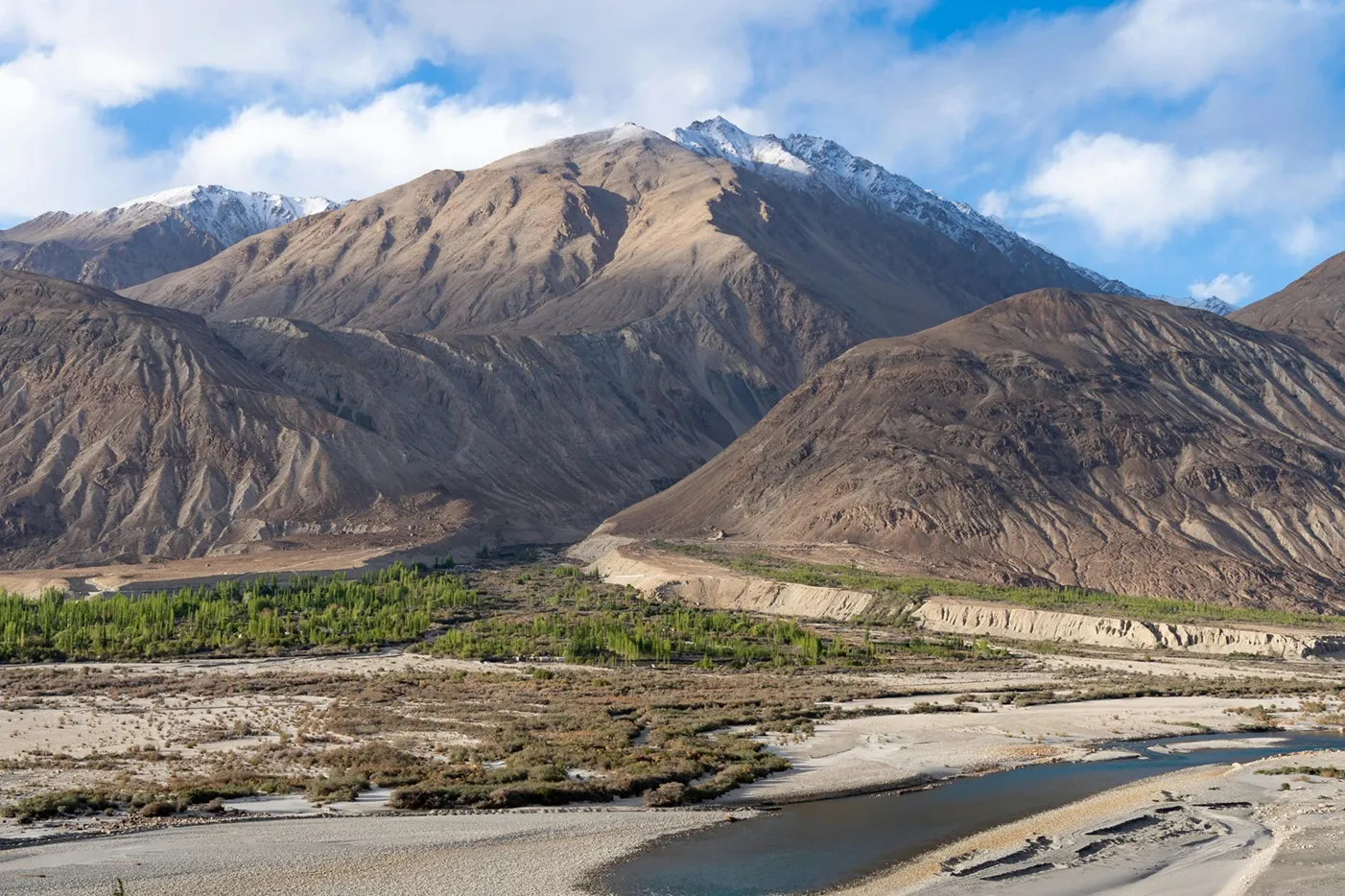
The Siachen Glacier in the Karakoram range of Ladakh is the world's highest militarized zone, with Indian Army posts at altitudes above 6,000 metres. Temperatures regularly reach minus 40 to minus 50 degrees Celsius. Snowstorms can pin soldiers to their posts for days. The thin air at altitude causes hypoxia — oxygen deprivation — that affects physical and mental functioning. Every physical task that is effortless at sea level becomes an ordeal at Siachen's altitude.
Soldiers are posted to Siachen in rotation, typically for three months at a time. The logistical effort required to supply these posts — food, fuel, medical supplies, ammunition — is extraordinary. More Indian soldiers have died at Siachen from the conditions — frostbite, altitude sickness, avalanches — than from direct combat.
They are there because India's strategic interests require a presence at those heights. They stay because they are soldiers, and it is their duty.
On Indian Army Day, every warm house, every comfortable meal, every ordinary peaceful day that Indians experience exists partly because of the soldier standing in the snow at Siachen. That connection — between the soldier's extreme sacrifice and the civilian's ordinary comfort — is worth sitting with, even briefly, on January 15.
My Personal Reflection on Indian Army Day
I have no family members in the Indian Army. I grew up as a civilian, in a city, far from any military cantonment. For most of my childhood, the army was something I saw on television — the Republic Day parade, news coverage of conflicts, movie heroes in uniform.
My understanding changed the first time I met a soldier outside of those contexts.
I was travelling by train from Lucknow to Delhi some years ago. Sitting across from me was a young man — perhaps 24 or 25 — in civilian clothes, carrying a single duffel bag. We got talking, and he mentioned he was going home on leave after seven months posted near the Line of Actual Control in Ladakh. He spoke about the posting with the matter-of-fact directness that I have since noticed is characteristic of soldiers — no self-pity, no drama, no particular expectation of admiration.
I asked him what the hardest part was.
He was quiet for a moment. Then he said: "Ghar ki yaad. Baaki sab toh training mein seekh lete hain." — Missing home. Everything else you learn in training.
That sentence — so simple, so human — did more for my understanding of what the Indian Army actually means and costs than any parade or documentary ever had. The training prepares you for the cold, for the altitude, for the enemy, for the mission. Nothing prepares you for the distance from your family. And yet they go. Year after year, posting after posting.
That is what Indian Army Day is really about.
Frequently Asked Questions About Indian Army Day
Q: Why is Indian Army Day celebrated on January 15 specifically? January 15 marks the day in 1949 when Lieutenant General K.M. Cariappa became the first Indian Commander-in-Chief of the Indian Army, replacing the last British Commander-in-Chief. This date symbolises the completion of India's military independence — the moment the army came fully under Indian command and authority.
Q: Who is Field Marshal K.M. Cariappa and why is he important? Field Marshal Kodandera Madappa Cariappa was the first Indian Commander-in-Chief of the Indian Army and one of only two officers ever to hold the rank of Field Marshal in the Indian Army (the other being Field Marshal Sam Manekshaw). He served from 1949 to 1953 and was known for his extraordinary personal integrity, discipline, and commitment to his troops. He is the reason January 15 is observed as Indian Army Day.
Q: How many soldiers does the Indian Army have? The Indian Army has approximately 1.4 million active personnel, making it one of the three largest standing armies in the world. It also maintains a reserve of over 1.1 million personnel. The army operates across all types of terrain — mountains, deserts, jungles, plains, and coastal regions.
Q: Does the Indian Army participate in international missions? Yes. India is consistently one of the largest contributors of troops to United Nations peacekeeping missions worldwide. Indian Army soldiers serve in conflict zones across Africa, the Middle East, and Southeast Asia, working under the UN flag to maintain peace and protect civilians in war-affected regions.
Q: How can ordinary citizens observe Indian Army Day meaningfully? The most meaningful observance is simply awareness — reading about the army's history and current role, visiting a war memorial if one is nearby, watching the Army Day parade coverage, and taking a moment to genuinely acknowledge the sacrifices of soldiers and their families. Some citizens donate to organisations that support veterans and martyrs' families. Schools can use the day for discussions on national security, citizenship, and the meaning of service.
Conclusion — A Nation Is Only as Strong as Its Gratitude
There is a phrase often used about armies: they give you the freedom to forget they exist.
That is both a tribute and a challenge. A tribute because it means they are doing their job well — the borders are holding, the peace is maintained, the ordinary life of the country continues undisturbed. A challenge because it means that the sacrifice required to maintain that peace can go unnoticed, unremarked, unacknowledged — absorbed quietly into the background of a comfortable civilian life.
Indian Army Day exists to interrupt that forgetting. To say, once a year, loudly and clearly: the peace you live in has a cost, and real people bear that cost, away from their families, in conditions most of us will never experience, because they chose to.
The soldier at Siachen standing in the snow. The engineer throwing a temporary bridge over a flooded river in Uttarakhand. The peacekeeper in South Sudan serving under a blue flag, far from home. The young man on the train, going home after seven months, saying he misses his family.
They are the Indian Army. And January 15 belongs to them.
Jai Hind. Jai Hind Ki Sena.
Enjoyed this article? You might also like:
- Republic Day 2026: History, Constitution, Parade and Why January 26 Is India's Most Important Date
- Vasant Panchami 2026: Saraswati Puja, Yellow Traditions, Rituals and the Festival That Welcomes Spring
Do you have a family member in the Indian Army, or a personal connection to this day? Share your story in the comments. Every story shared on Indian Army Day is an act of gratitude.
Disclaimer: This article is for informational purposes only and does not constitute professional advice. Read our full Disclaimer.



Recent Comments
No comments yet.